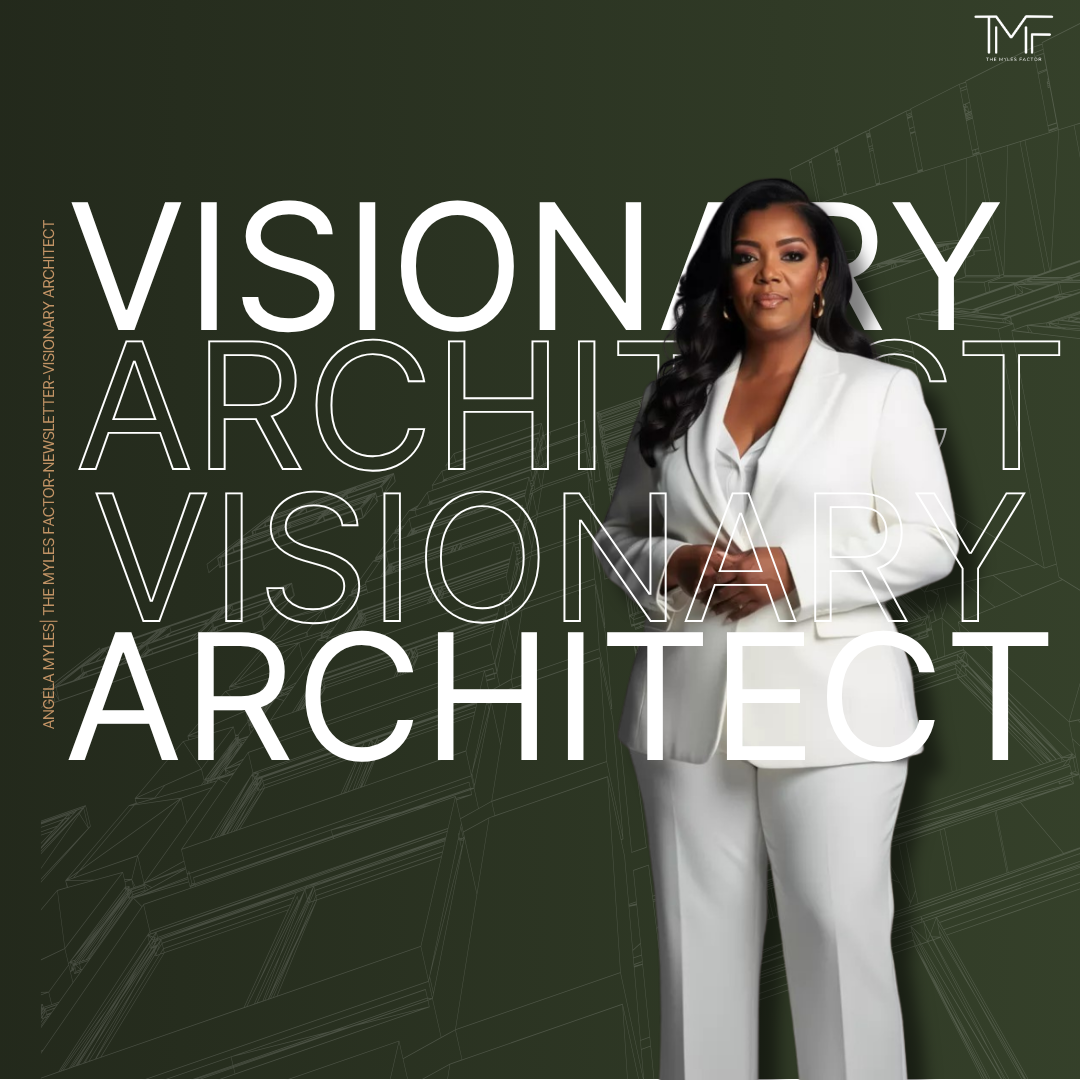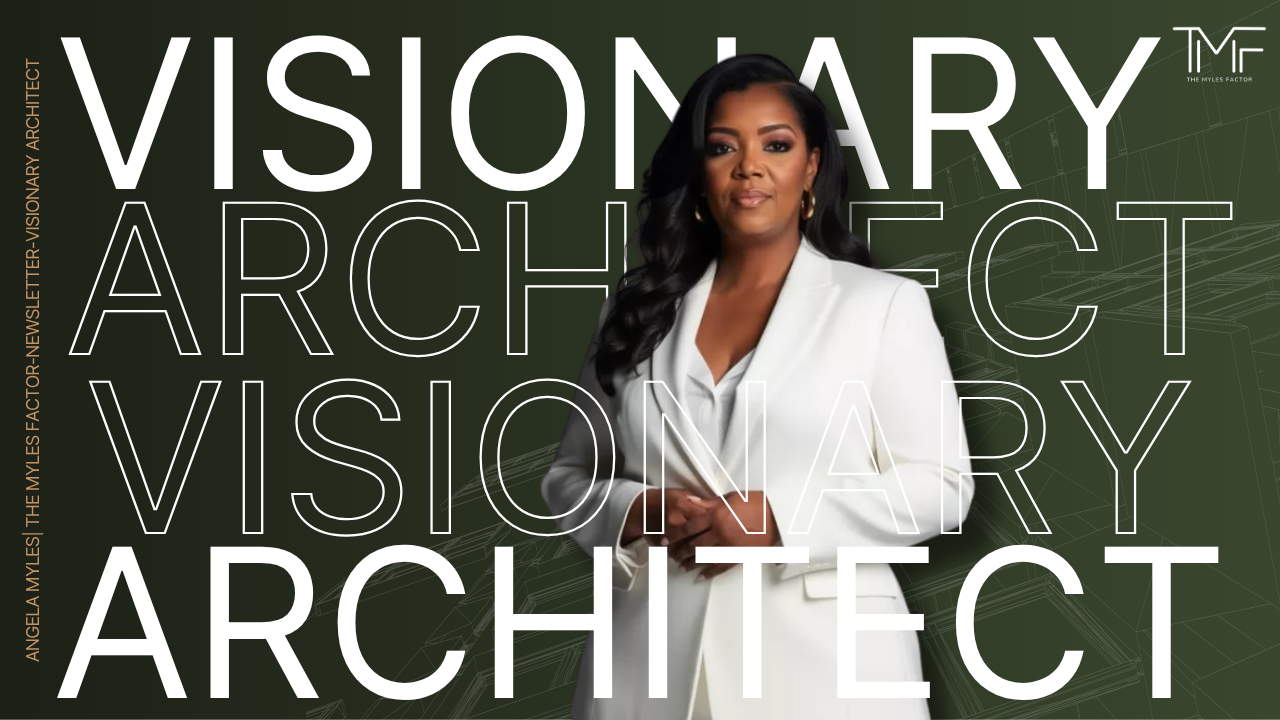
Issue 015: When the Vision Outgrows the Way You've Been Carrying It
Aug 16, 2026Last week, I wrote something that has stayed with me:
The visionary comes first. Then we architect what the vision requires.
I have probably said some version of “I believe in the vision of the visionary” for years.
But I'm hearing it differently now.
Maybe because I'm 52.
Maybe because I've spent more than a decade building businesses.
Maybe because life has a way of teaching you things that business books simply cannot.
Or maybe because this is the first time in a very long time that I've given myself enough room to look back at what I've built without immediately asking myself what I need to build next.
Whatever the reason, I've been thinking about the businesses I've built over the years.
And I've realized something.
I've built some really good things.
Things that worked.
Things that made money.
Things that served people well.
And some of those good things eventually became too much for me to carry.
Both can be true.
I Didn't Start Out Trying to Build All of This
When I first went fully into consulting, it felt like a natural extension of what I already knew how to do.
I had led a nonprofit. I understood programs, organizational development, documentation and operations. I knew how to walk into a room, listen to what someone was trying to accomplish, look at all the pieces sitting in front of them and start making sense of them.
I didn't call that Business Architecture then.
I was just doing what I knew how to do.
And people paid me for it.
Over time, one thing became another.
Consulting opened the door to coaching.
Teaching became courses.
Courses became programs.
Programs became communities.
Ideas became resources.
One audience became another audience.
Eventually, we had VMA Consulting Group, The Myles Factor and The Fundable Church, each doing meaningful work in its own way.
And for a while, I was proud that I had figured out how to create multiple ways for our expertise to produce income.
I had.
What I hadn't fully understood was that I had also created multiple things that needed to be fed.
That's the part we don't talk about enough.
Every time I created another way for the business to make money, I also created another thing that needed something from me.
And eventually, I had built myself into the middle of a very sophisticated machine.
The machine worked.
But it needed Angela.
A lot.
There Was a Season When I Thought the Answer Was More
I can see now why I built that way.
For years, I had been learning from some of the best people I could find in the online business world.
One person helped me understand audience.
Another helped me understand digital products.
Someone else helped me understand memberships.
I learned launches and evergreen systems. I learned positioning and pricing. I learned how to take what was in my head and turn it into something other people could buy and experience.
Every lesson solved a problem I had at the time.
And I am grateful for that.
But when you know how to build a lot of things, there's a temptation to believe you should build a lot of things.
I know differently now.
Sometimes the smartest business decision isn't figuring out how to make the idea work.
Sometimes it's deciding that the idea doesn't belong in the business at all.
That realization has changed the way I think about strategy.
Consulting Was One of My First Teachers
Consulting taught me something I wouldn't fully understand until years later.
It was one of my strongest pathways because it relied on something I am extraordinarily good at.
Give me complexity.
Give me the scattered pieces.
Tell me what you're trying to accomplish.
And my mind immediately starts looking for the structure.
I can see relationships between things that don't appear connected yet. I can usually tell when something is missing, when something is premature, or when three different ideas are actually parts of the same thing.
That ability made me a very good consultant.
It also created a business that depended heavily on me.
Because people weren't simply buying a document or a deliverable.
They were buying how I saw the problem.
So when Angela couldn't show up, a very important part of the business couldn't show up either.
At the time, I treated that as a circumstance.
Today, I see it as architecture.
The business was doing exactly what I had designed it to do.
I just hadn't realized I was part of the infrastructure.
That sentence has stayed with me.
Because once you recognize that, you can't solve the problem simply by working harder.
So I Built More Ways for the Business to Work
And in many ways, that was the right instinct.
I created courses and resources.
I built communities.
I taught groups instead of always working one-on-one.
I learned how to use systems.
I learned how to automate pieces of the customer journey.
I developed intellectual property that could serve more than one person at a time.
Those things reduced certain kinds of dependency.
But somewhere along the way, diversification became complexity.
Instead of one thing depending too heavily on me, I now had several good things requiring my attention in different ways.
That's an important distinction.
More revenue streams don't automatically create a more sustainable business.
Sometimes they simply create more streams for the visionary to stand in the middle of.
I know because I've done it.
And I don't say that with regret.
I say it with perspective.
There are lessons you can only learn after the thing works.
Success Can Hide Architectural Problems
That's probably one of the biggest lessons I'm carrying into this chapter.
When something isn't making money, we know there's a problem.
When something is making money, we don't always look as closely.
Revenue has a way of making us assume the architecture must be sound.
But I've learned to ask a different question now.
What does the business require in order to keep producing that revenue?
That's where things get interesting.
A consulting practice may be profitable because the founder is delivering every engagement personally.
A membership may have wonderful recurring revenue while requiring someone to constantly create, engage and retain.
A course may generate income while requiring repeated launches that the visionary secretly hates.
None of those models are inherently wrong.
That's the point.
The question is whether they are right for the person who has to live inside them.
That's why I don't believe Business Architecture begins with someone telling you which business model is hot right now.
I need to know you first.
Then I can look at what the business is asking you to carry.
This Is Where My Work Has Become Very Clear to Me
Something has been happening as I've spent August mapping Business Architecture.
The more I work on it, the more certain I become about what I'm actually good at.
And there is something deeply freeing about reaching a point in your life where you can say that without shrinking it or dressing it up.
I see architecture.
That's my work.
I can listen to someone describe the business they think they have and often hear another business underneath it.
I can look at the things they've accumulated over the years and begin separating what belongs from what doesn't.
I can hear expertise that hasn't been named yet.
I can see when a service contains the beginning of a methodology.
I can see when someone is trying to solve an architectural problem with another offer.
And I can often see when the thing they're preparing to build is going to require a version of themselves they have already told me they don't want to be anymore.
That's my zone of genius.
I don't need to become the world's expert on every way someone can make money online.
I don't want that job.
There are people who have spent years mastering courses, memberships, speaking, content, evergreen marketing and other specialties. When one of those things belongs in your architecture and you're ready to take it further, there may be a specialist who can help you do exactly that.
My responsibility comes earlier.
Should you build it at all?
And if you should, where does it belong?
What needs to exist before it?
What should connect to it?
What will it require from you?
And does the whole thing make sense for the visionary sitting in front of me?
That's Business Architecture.
And after years of trying to explain all the different things I knew how to do, I finally understand that this is the thread that was running through all of them.
Which Brings Me Back to August
I am living this in real time.
When I decided to bring Visionary Architect back, I knew I would eventually create paid ways for people to go deeper into this work.
The old version of me might have started there.
What's the offer?
What's the launch date?
What's the price?
What do I need to sell?
Instead, I've spent much of August with a notebook.
Drawing.
Writing.
Moving boxes around.
Renaming things.
Throwing things away.
Coming back the next day and looking again.
And I have loved it.
Because I'm not trying to force The Myles Factor to produce something before I understand what the architecture actually requires.
The products will come.
The experiences will come.
The deeper work will come.
But this time, they will come from the architecture.
They won't be disconnected things I now have to figure out how to carry.
And perhaps that's one of the clearest signs that I've changed.
I'm no longer impressed simply because I can build something.
I want to know whether it belongs.
Maybe Your Vision Hasn't Stopped Working
Maybe you've simply outgrown the way you've been carrying it.
That's different.
Sometimes the answer isn't another idea.
It isn't another offer.
It isn't another certification.
And it certainly isn't automatically another platform to manage.
Sometimes you need to put everything you already have on the table and look at it again.
There may be more there than you realize.
There may also be things you've been carrying long after their assignment ended.
And somewhere underneath all of it may be the business you've been trying to build all along.
That's what I'm discovering in my own work.
The vision didn't disappear.
I just needed an architecture capable of carrying the version of it—and the version of me—that exists now.
The Architect's Question
So this week, I won't give you a list of things to fix.
I just want you to sit with one question:
Has your vision outgrown the way you've been carrying it?
And if the answer is yes, resist the urge to immediately build something new.
Look at what is already there.
We may discover that the next chapter doesn't require more.
It requires architecture.
Grace and peace,
Angela Myles
Founder, The Myles Factor